
ROTATING EQUIPMENT / SIX STOPS
Read the parts around a rotating machine.
Follow the passages. Compare support, sealing and connection.
A six-stop study of pump passages, shaft support, seal boundaries and spacer-coupling parts, with original illustrations and exact component links.
Four independent teaching models compare equipment roles. This reading order supplies no matched installation, operating sequence, certification or personal learning record.
FOUR ROLES / SEPARATE ORIGINAL ASSEMBLIES
Choose the role you want to inspect.
Each illustration opens its independent component explorer. The four drawings are displayed at different scales; their proximity here does not establish a physical connection or compatible installation.
STUDY 01 / 06
Start with the machine and its passages
Locate the liquid-side components before following the shaft.
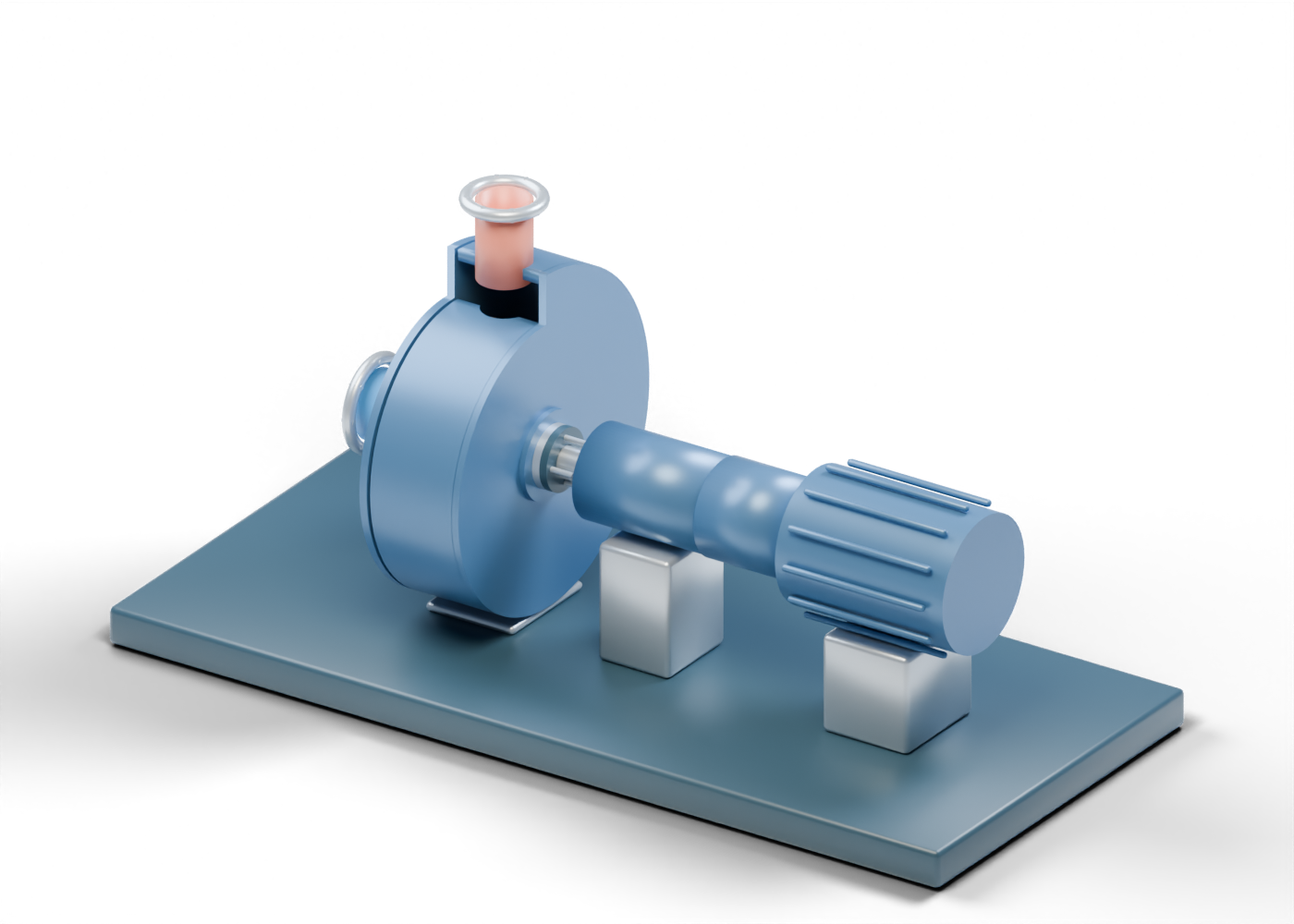
Open the pump's suction inlet, impeller vane and discharge outlet. These are separate named regions in our original assembly. The vane sits between two shrouds; the shaft reaches the impeller hub from the drive side.
KSB's pump lexicon describes volute-casing pumps with different drive, bearing and sealing arrangements. Our single generic scene does not select one of those catalogue designs. Its casing and impeller geometry provide places to inspect; there is no pump curve, calculated flow field or measured efficiency.
PAUSE AND EXPLAIN
Does the shape of this impeller prove a flow rate or efficiency?
Reveal the explanation
No. It identifies an original teaching shape and its named regions. A flow or efficiency claim requires evidence for the actual pump and duty; no calculated or measured result is supplied here.
STUDY 02 / 06
Separate shaft support from connection
Compare the bearing's rings, rolling elements and cage.
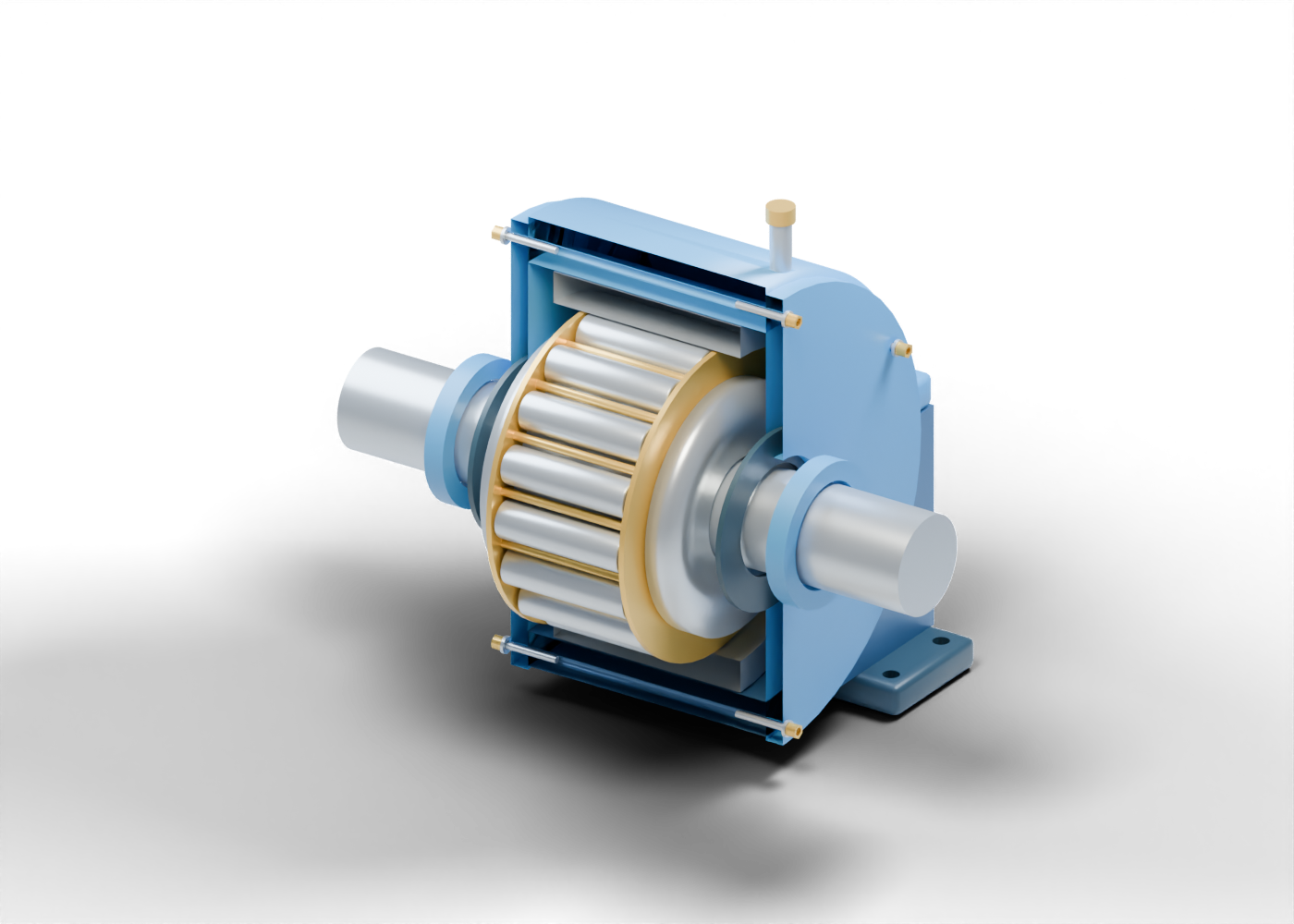
Move to the independent housed bearing. Inspect the shaft-side inner ring, one cylindrical roller, a cage bridge and the outer ring. Sixteen rollers and sixteen cage bridges repeat around the axis; each remains individually selectable.
The SKF reference discusses a particular cylindrical-roller product and its cage. We use limited ring, roller and cage vocabulary only. Our invented static gaps provide visual separation, with no selected shaft fit, calculated rolling contact, load rating, bearing life or lubricant requirement. The housing is a separate support concept, not a specified replacement for the pump's bearing region.
PAUSE AND EXPLAIN
What changes when you select a cage bridge instead of a roller?
Reveal the explanation
You inspect a spacing region rather than a rolling element. The separate names help distinguish their intended roles; they do not demonstrate contact motion, rated support or service life.
STUDY 03 / 06
Compare the seal's separate boundaries
Find the faces, secondary boundaries and sleeve.
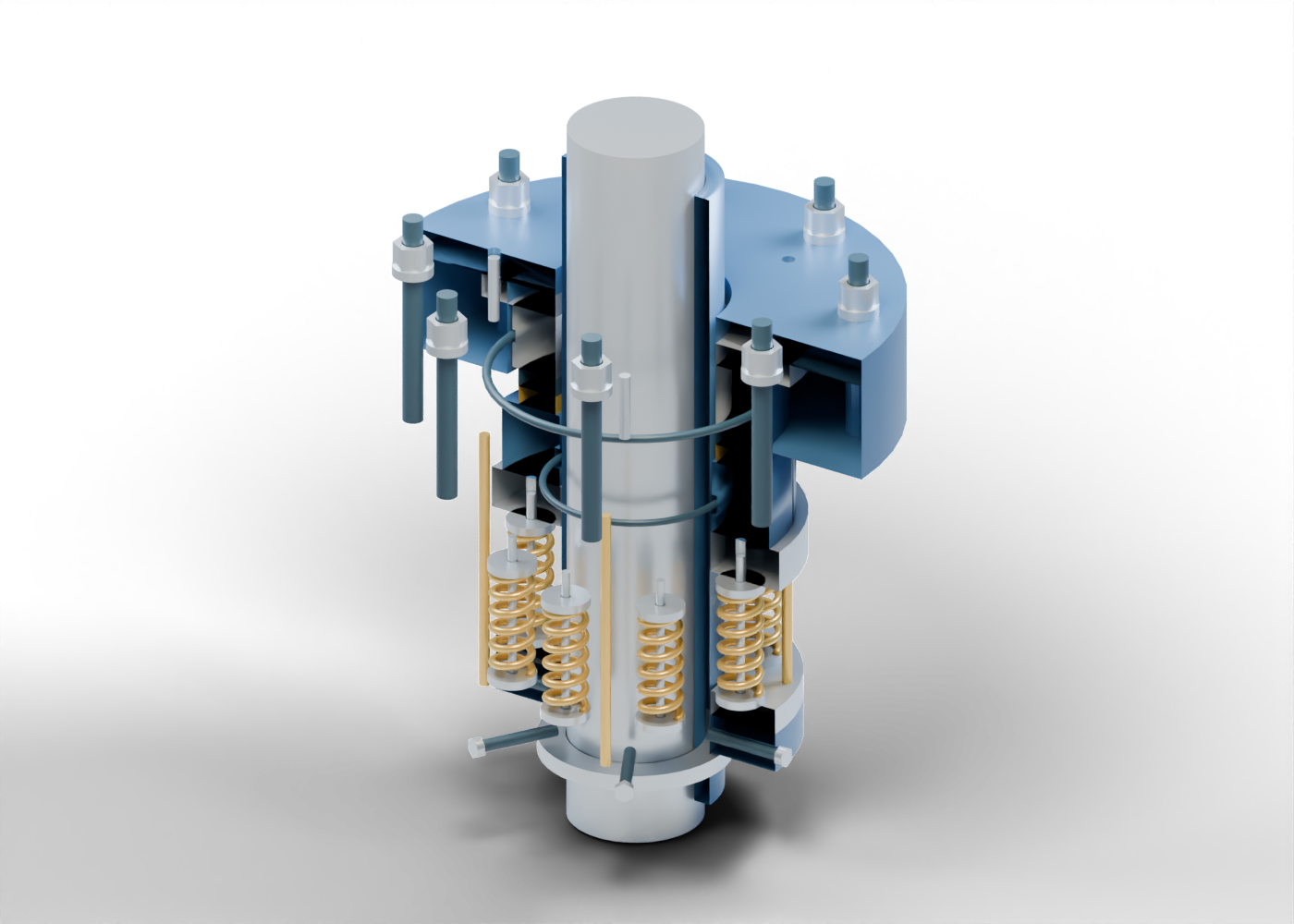
Open the independent face-seal model. The rotating and stationary face regions are separately named annular parts. Secondary-seal markers and the hollow shaft sleeve are separate again; selecting a face does not select all the other boundaries.
This is an original assembly comparison. Deliberate visible separation, spring shapes and solid boundary markers do not establish a sealing film, leakage, thermal performance, preload, material selection or a compatible seal plan for the pump. The seal's sleeve and springs also have different roles from the bearing cage and coupling laminae.
PAUSE AND EXPLAIN
Does selecting both primary faces establish that the assembly is pressure-tight?
Reveal the explanation
No. The two selectable faces distinguish regions in the illustration. No leakage, contact, film, thermal or operating result is supplied, and other boundaries remain separate.
STUDY 04 / 06
Follow the coupling's two pack locations
Compare shaft hubs, laminae, attachments and the centre member.
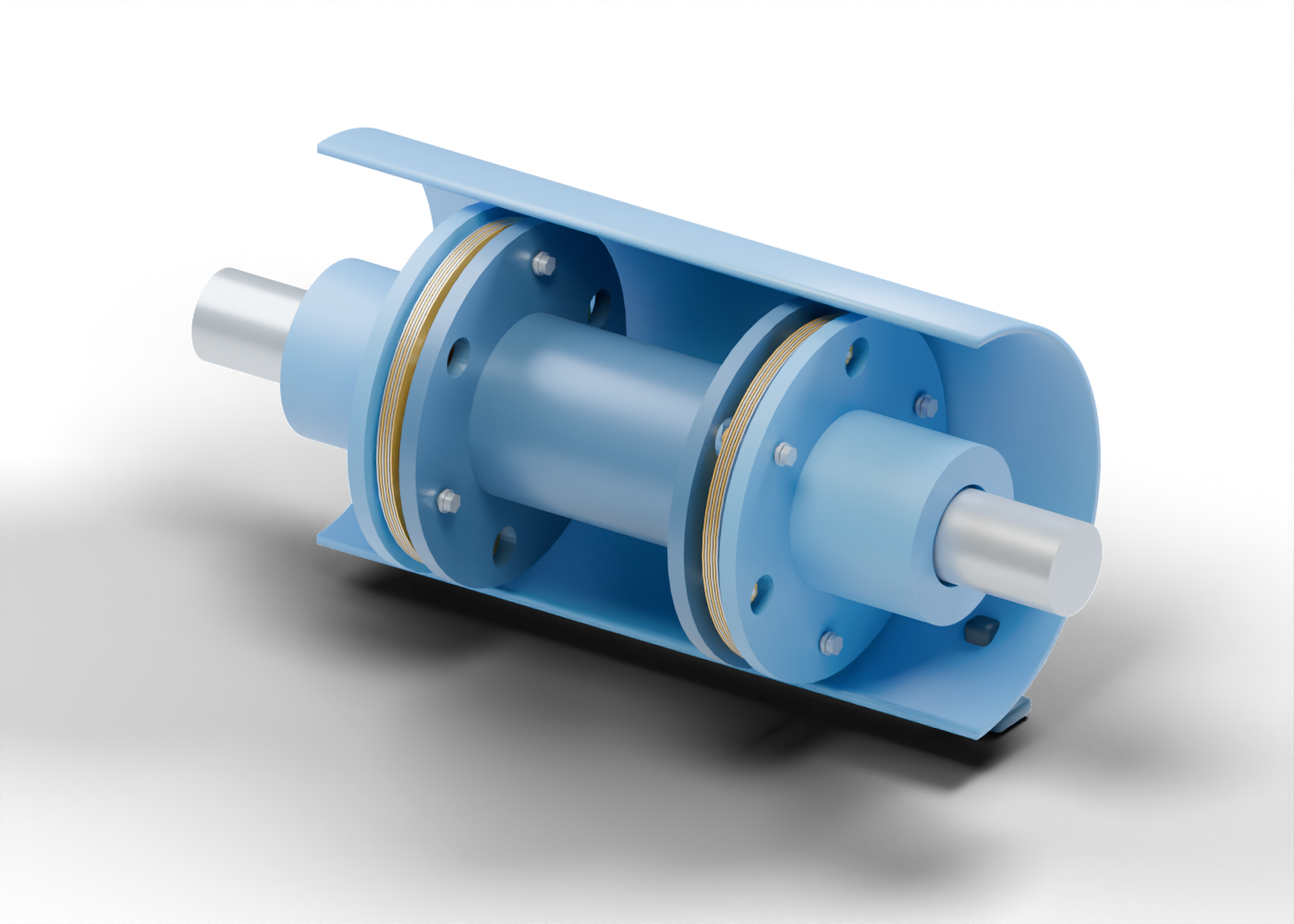
The independent spacer coupling has driver-side and driven-side shaft/hub regions, two six-layer disc packs and a hollow centre spacer. Three hub-side and three spacer-side attachment positions alternate around each pack. Open one lamina and one hollow attachment sleeve to distinguish a thin pack member from joint hardware.
Rexnord's public spacer-coupling page supplies limited pump, blower and compressor application context. No product profile, dimensions, material or rating is adopted. Our static laminae and invented gaps demonstrate inspectable locations; no torque transfer, flexure, fatigue, balance, rated misalignment or installed alignment is calculated.
PAUSE AND EXPLAIN
Can two visible packs establish a rated misalignment capacity?
Reveal the explanation
No. They establish two inspectable pack locations in this original static geometry. Rated duty, deformation and real-machine alignment need separate evidence.
STUDY 05 / 06
Compare roles without assembling a specification
Use the four examples to ask which interface each part belongs to.
Return to the pump's generic coupling element and seal face, then compare them with the standalone models. The pump illustrates these regions within one scene; the separate models make additional pieces visible. Their shaft sizes, proportions and details were invented independently.
A shared word such as shaft, sleeve or ring does not establish interchangeability. These pages supply no matched dimensions, tolerances, material schedules, duty envelope, full collision analysis or qualified installation. The role table is a reading aid, not a bill of materials or equipment-selection guide.
PAUSE AND EXPLAIN
What would you need before calling these four examples one matched installation?
Reveal the explanation
Evidence for the actual selected equipment, interfaces, dimensions, materials and duty, followed by qualified review. These separate original teaching models do not provide that specification.
STUDY 06 / 06
Read a reliability headline with the parts in view
Distinguish a component name from a demonstrated machine outcome.
If a headline names a bearing, seal or coupling, first locate the component role. Then ask which machine and revision the claim concerns, whether the source reports a proposal or an observed result, and which period, duty and comparison support the stated change. A render can explain the noun; it cannot supply the missing record.
This study reports no facility outage, replacement programme or performance gain. Keep a primary source beside any real news claim and identify the evidence actually available. The dated atlas briefings offer separate reading examples; they do not qualify these rotating-equipment concepts.
PAUSE AND EXPLAIN
A story mentions a coupling upgrade. Does this render demonstrate the upgrade's reliability gain?
Reveal the explanation
No. It explains component vocabulary. A reliability outcome needs attributable evidence for the real equipment, operating context, period and comparison; this original illustration provides none of those records.
Keep the role separate from the result.
A part name helps you understand a claim. The drawing supplies no real-machine performance record.
| Role | Visible regions | Evidence question | What this illustration lacks |
|---|---|---|---|
| Pump passages | Inlet, vane and outlet | Which actual pump and duty support a reported flow or efficiency? | No pump curve or computed/measured flow result |
| Shaft support | Inner ring, rollers, cage and outer ring | Which actual bearing and support arrangement are involved? | No selected fit, rolling contact, load or life rating |
| Sealing boundaries | Faces, secondary markers and sleeve | Which real seal arrangement and evidence support a leakage claim? | No seal plan, film, leakage or thermal result |
| Driver connection | Hubs, two lamina packs, hardware and spacer | Which real coupling and alignment/duty evidence support the claim? | No rated torque, deflection, fatigue or alignment result |
Keep the sources beside the illustration.
Primary references checked September 27, 2026. These support limited arrangement and component vocabulary. They do not qualify a particular installation, rating or maintenance procedure.
- KSB pump lexicon — general volute-pump arrangements ↗
Undated public lexicon page; general arrangement vocabulary only.
- SKF Evolution — cylindrical-roller ring, roller and cage context (2007) ↗
Published February 27, 2007; product-specific claims and designs are not adopted.
- Rexnord — general spacer-coupling application context ↗
Undated public page; no series, dimensions, ratings or procedure adopted.
The seal comparison describes named regions in the generic assembly; actual seal choice and service conditions require qualified assessment.