
ALBERTA GAS PROCESSING / SIX QUESTIONS
Follow the gas. Question the gaps.
From raw gas to marketable gas and separate liquids, without inventing one plant.
Six questions connect independent 3D equipment lessons from inlet separation to gas treatment, compression, NGL recovery and fractionation without pretending they form one engineered plant.
These are independent generic equipment illustrations. Process order, equipment need and destination depend on a real inlet stream and facility; no continuous plant or operating sequence is depicted.
A READING MAP, NOT A PROCESS DESIGN
Start with the stream, then ask what changes.
The Alberta Energy Regulator distinguishes raw and marketable gas, gas processing and NGL fractionation. The map below names possible roles; it does not assert a fixed order or connected equipment.
Gas branch
Separate liquids? Remove acid gas or water? Compress or cool? Verify receiving specifications.
Liquids branch
Was a mixed NGL stream actually recovered? If so, was it moved to a fractionator?
Independent recovery-machine, heat-exchange core and cold-separator roles are modeled; a complete NGL-recovery unit is not. The fractionation-column inlet remains an open boundary, not proof of an extraction train.
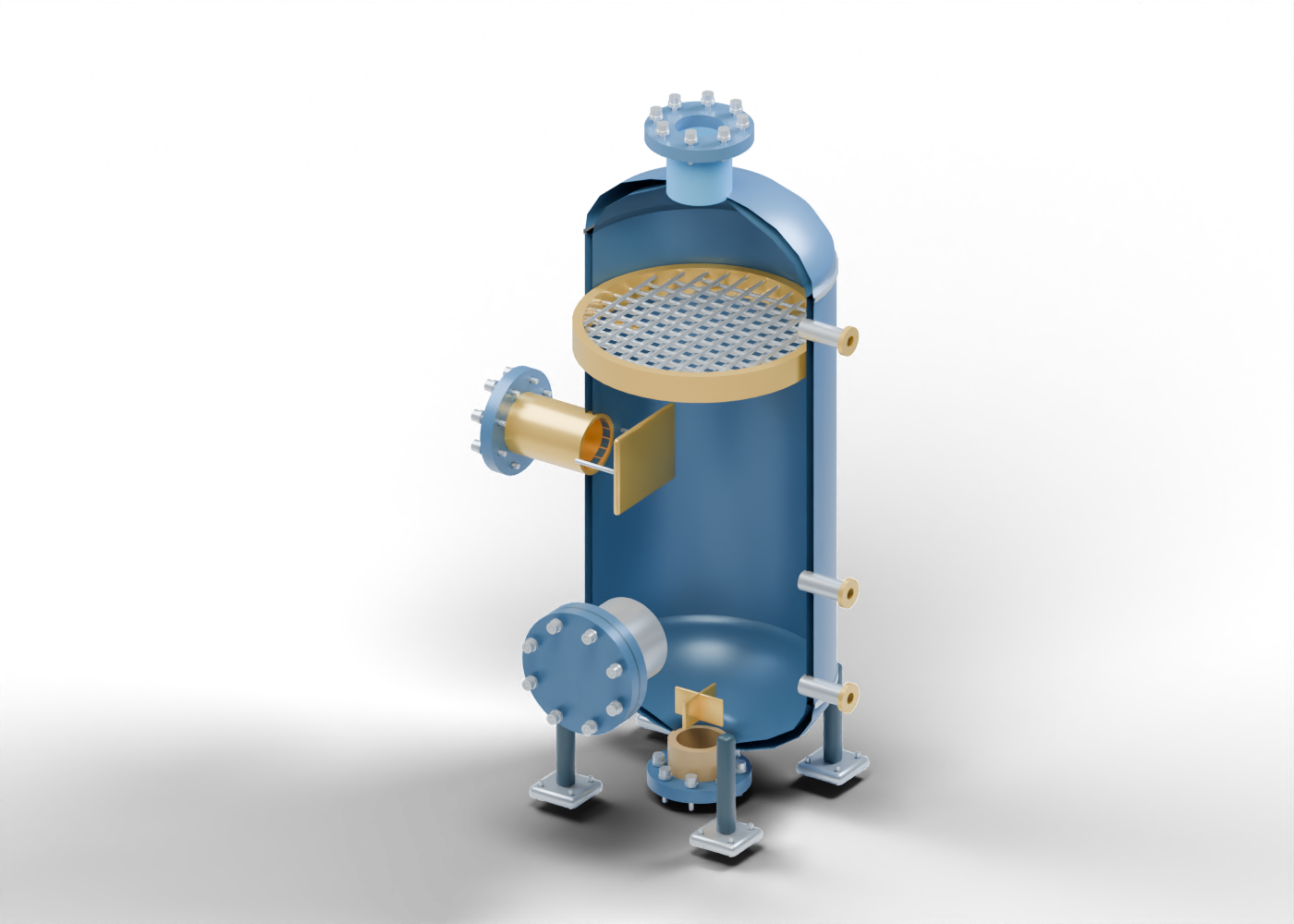 QUESTION 01 / SEPARATION
Compare inlet boundaries ↗
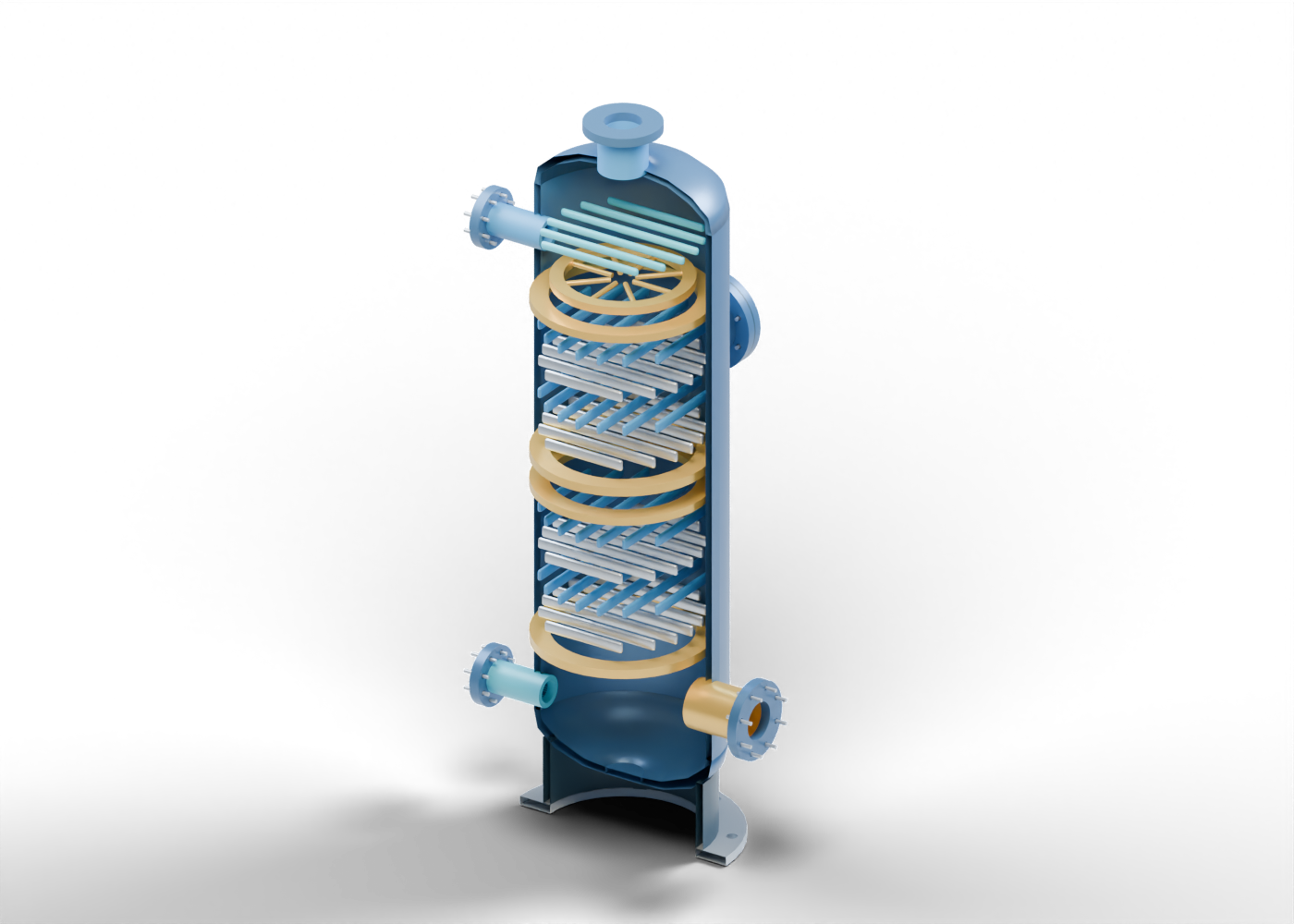 QUESTION 02 / TREATMENT
Inspect a treatment role ↗
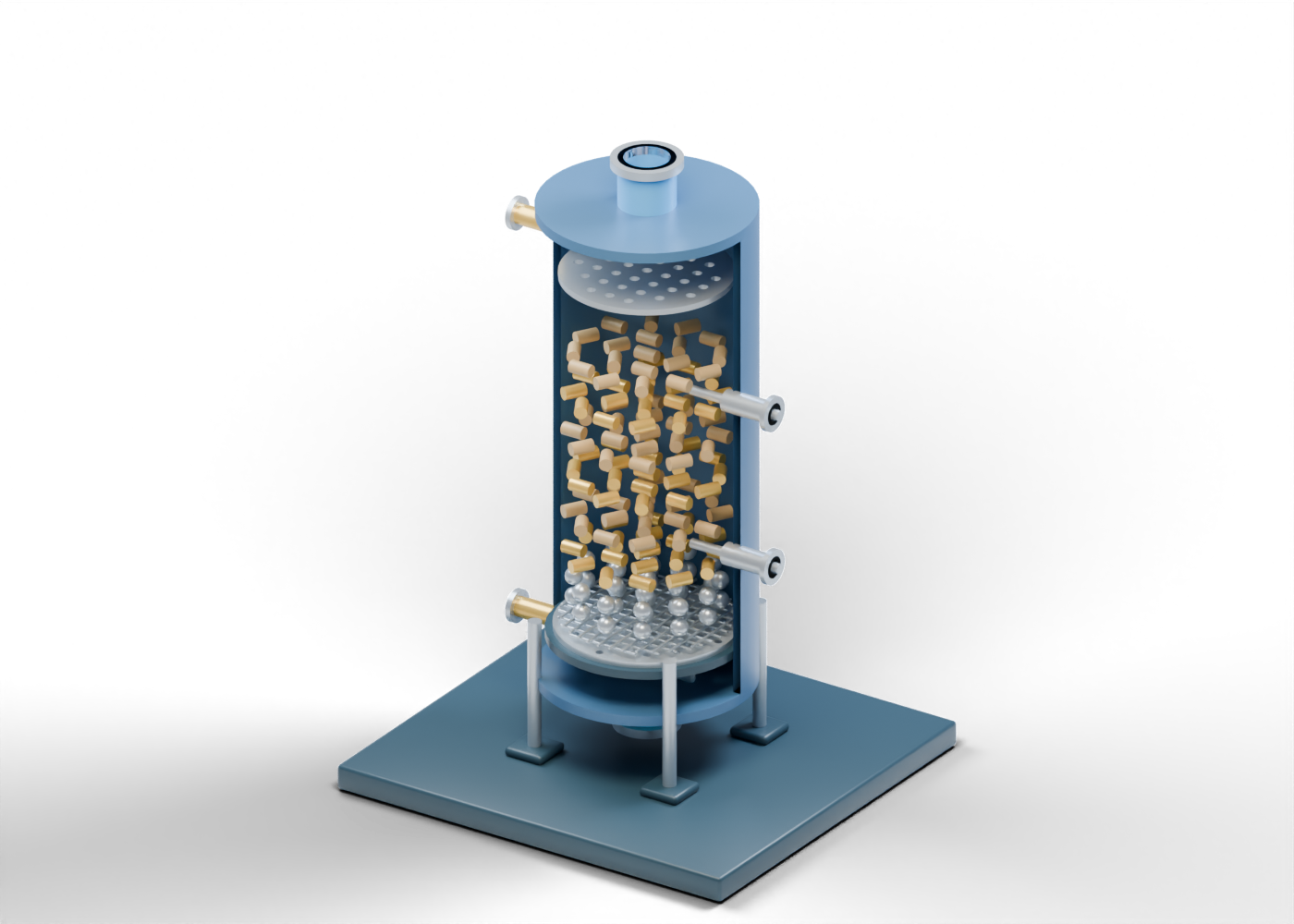 QUESTION 03 / WATER REMOVAL
Inspect the solid-bed roles ↗
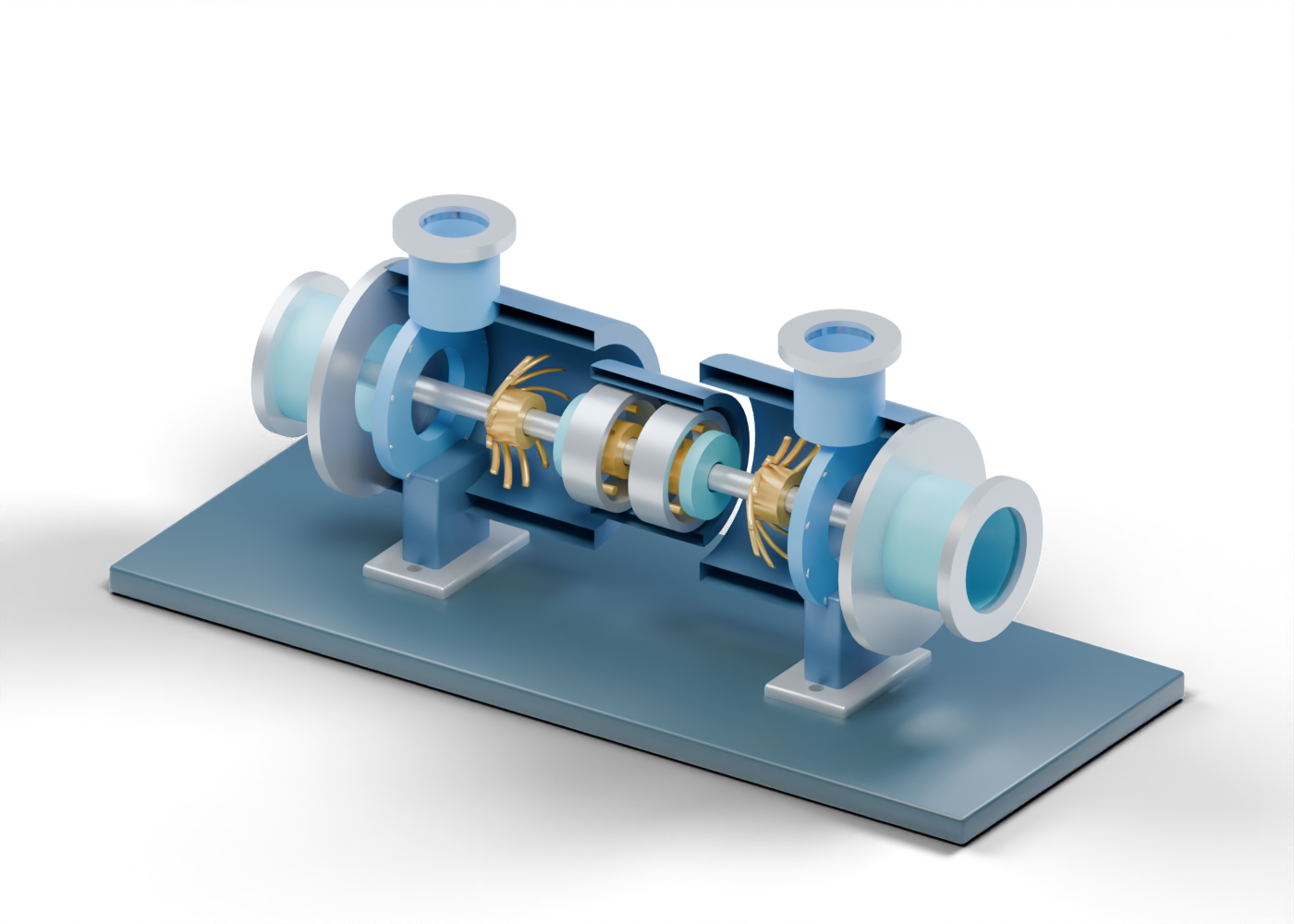 QUESTION 05 / RECOVERY MACHINE
Compare the two wheels ↗
 QUESTION 05 / HEAT EXCHANGE
Inspect the layered core ↗
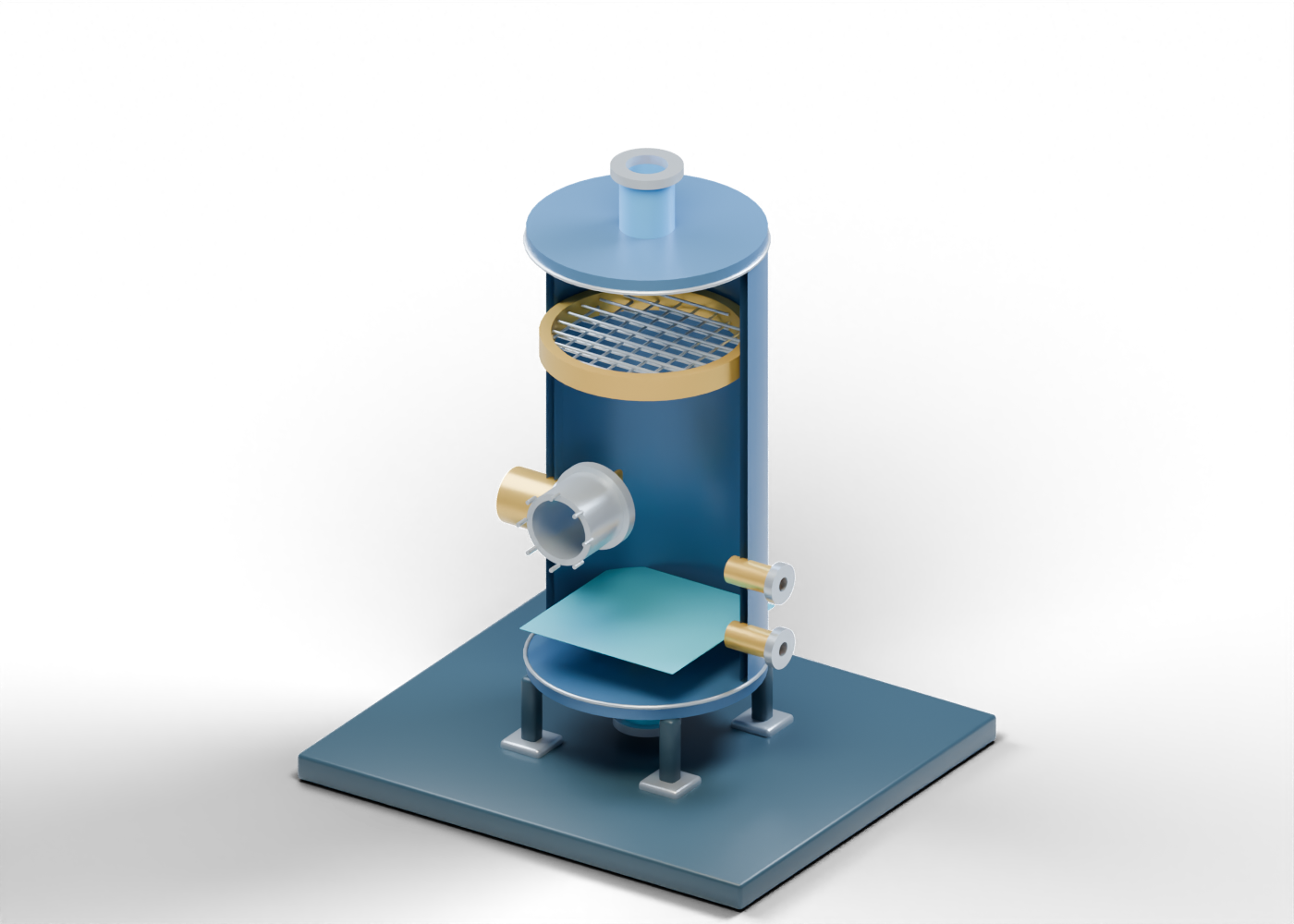 QUESTION 05 / COLD SEPARATION
Find two outlet boundaries ↗
STUDY 01 / 06
Begin with an unknown inlet stream
Name the possible gas and liquid boundaries before assuming a treatment scheme.
The Alberta Energy Regulator distinguishes raw gas, marketable gas, gas plants and fractionation facilities. An inlet may bring gas, hydrocarbon liquid and water, but its actual composition has to be measured. This standalone separator illustration marks possible feed, gas and total-liquid boundaries.
A visible gas outlet does not establish sales-gas quality. The illustrated vessel is not a surveyed Alberta asset, and its position here does not make the following models one connected plant.
PAUSE AND EXPLAIN
Can the picture identify what is actually in a raw-gas stream?
Reveal the explanation
No. A sampled composition and facility records are needed before choosing treatment or claiming a product.
STUDY 02 / 06
Ask whether acid-gas treatment is needed
Compare gas and solvent boundaries without assuming every plant has an amine unit.
The U.S. Energy Information Administration describes contaminant removal as one possible gas-processing stage and names amine treatment for hydrogen sulfide and carbon dioxide. This separate absorber illustration identifies sour-gas entry, lean-amine entry and treated-gas exit.
Neither the model nor a generic pathway proves an inlet concentration, a removal target, solvent choice, acid-gas destination or permission to operate. Some streams and plants use different treatment or none of this equipment.
PAUSE AND EXPLAIN
Does an absorber shell prove the outlet meets a pipeline specification?
Reveal the explanation
No. Composition, operating measurements and the applicable receiving specification would have to support that claim.
STUDY 03 / 06
Follow the water-removal question
Compare liquid-glycol absorption with solid-bed adsorption and ask what cryogenic pretreatment requires.
Dehydration removes water vapour before transport or further processing. The U.S. EPA describes glycol contacting as one common approach. Honeywell UOP describes molecular-sieve water removal before cryogenic NGL processing; Arkema distinguishes adsorbent particles from inert supports and bed hardware. The two original vessel illustrations let you compare these different roles.
Neither a dry-gas label nor the sparse enlarged pellet markers prove a water content or dew point. The solid-bed model omits microscopic pores, actual packing, adsorbent selection and the other beds, valves and regeneration equipment needed for a cyclic system. This lesson does not assume the separate glycol illustration prepares gas for cryogenic service.
PAUSE AND EXPLAIN
What would support a real outlet-water claim?
Reveal the explanation
A defined requirement and attributable measurements or engineering records, not the vessel colour or outlet name.
STUDY 04 / 06
Compare compression and cooling roles
See distinct equipment functions without drawing an invented route between them.
Gas systems can require compression and heat removal, but their placement depends on the actual facility. The three-stage compressor illustration has open suction and discharge boundaries; the separate air-cooled exchanger shows a process-tube and fan role.
These assets were not selected to match one another. They give no pressure ratio, gas composition, discharge temperature, cooler duty, surge control, driver, relief scheme or continuous gas path.
PAUSE AND EXPLAIN
Does placing these two images together prove a designed compressor-cooler train?
Reveal the explanation
No. A qualified arrangement needs actual process conditions, selected equipment and documented connections.
STUDY 05 / 06
Compare three recovery-stage roles without inventing a plant
Distinguish heat exchange, expansion and cold gas/liquid separation from a measured NGL-recovery result.
The U.S. Energy Information Administration describes hydrocarbon gas liquids recovered at natural-gas processing plants. Alberta's regulator distinguishes extraction plants, straddle plants and fractionation plants. Recovery method, location and products vary by facility. Chart Industries describes a common-shaft expander-compressor used in NGL-recovery applications.
The original turboexpander-compressor, separate plate-fin core and separate cold gas/liquid separator illustrate three possible roles, not a complete NGL-recovery unit. The core has no engineered common headers or proven duty; the cold separator has no measured phases or qualified cold service. Their interfaces are not connected or matched. Product handling, process conditions and a recovery column remain outside these models. A mixed NGL feed to the next illustration is an open boundary, not a modeled result.
PAUSE AND EXPLAIN
Do three separately modeled recovery-stage roles establish a functioning NGL plant?
Reveal the explanation
No. The exchanger core, expansion machine and cold separator are independent illustrations. Designed connections, a recovery column, process conditions, safety systems and product assays are absent.
STUDY 06 / 06
Finish at an unqualified fractionation concept
Use the column to ask about product cuts rather than infer them from coloured parts.
The Alberta Energy Regulator describes fractionation as splitting a received NGL mixture into component products. The separate original column has tray openings, an overhead boundary and a bottoms boundary to make those questions visible.
The picture does not select a deethanizer, depropanizer or debutanizer, establish purity, name an Alberta facility or connect to the independent upstream models. Follow the dedicated column course for its reboiler and reflux questions.
PAUSE AND EXPLAIN
Can this model support a claim that a real Alberta plant made specification propane?
Reveal the explanation
No. The named plant, feed and product records, measurement basis and applicable specification are all missing.
What would make a facility claim credible?
Models teach part names and process questions. Claims about actual quality, recovery and sales need attributable records from the named facility.
| Claim | Evidence to seek | Missing from these illustrations |
|---|---|---|
| Raw gas was treated | Sampled inlet composition, chosen process and dated facility records | No sampled inlet or selected process |
| Water or acid gas was removed | Defined inlet/outlet measurements and receiving specification | No measured removal or gas-quality result |
| NGLs were recovered | Recovery-unit arrangement and mixed-product assay | Independent heat-exchange, expansion and cold-separation roles; no complete train or assay |
| A specification liquid was sold | Product assay, custody/receipt records and applicable specification | No named plant, selected cut or measured product |
Check the process vocabulary.
References checked 2026-09-29. The U.S. sources describe general technologies; the Alberta regulator supplies local terminology. None validates this collection as a real facility.
- Alberta Energy Regulator — ST98 glossary ↗
Alberta definitions for raw and marketable gas, field and straddle plants, extraction and fractionation.
- U.S. EIA — Natural gas delivery and processing ↗
General processing stages and the fact that their order and need vary.
- U.S. EIA — Hydrocarbon gas liquids from gas processing ↗
Distinction between recovered mixed HGL streams and later fractionation.
- U.S. EPA — Glycol dehydrators ↗
General glycol-dehydration role; no project-specific performance inferred.
- Chart Industries — Turboexpanders ↗
General expander-compressor common-shaft role and NGL-recovery application; no product design or performance adopted.
- Chart Industries — Brazed aluminum heat exchangers ↗
General plate-fin core and cold-box role in NGL recovery; no vendor configuration, thermal duty or service qualification adopted.
- Chart Industries technical article — turboexpander components and an example cold-separator role ↗
A cold separator appears as a distinct role in one example; its layout, geometry and performance were not copied.
- Honeywell UOP — Adsorbents solutions brochure ↗
Broad molecular-sieve dehydration role before cryogenic NGL processing; no selection, operating conditions or vendor design copied.
- Arkema — Molecular sieves for natural-gas processing ↗
Broad adsorbent-particle and separate inert-support roles; no media specification, loading procedure or product performance adopted.