
OIL SANDS / SIX STOPS / FIVE ORIGINAL MODELS
Follow the tailings questions.
Start at separation. Follow two distinct branches. Ask what the drawings can prove.
A six-stop visual study of primary separation, whole-tailings pumping and classification, the separate middlings flotation branch, and thickening questions.
One AER-filed Horizon plan informs the stream vocabulary for one operation. These independent original concepts are not a matched facility, process-flow diagram, equipment specification or operating sequence.
FIVE MODELS / TWO DISTINCT QUESTIONS
See the branches before opening a model.
The cards are independent original illustrations at different scales. Arrows below describe a reading order from one cited account; they do not depict connected piping.
Whole-tailings question
Pump transfer → cyclone classification → fines-rich overflow toward thickening
Separate middlings question
Secondary flotation → remaining slurry toward thickening
The lower coarse-sand cyclone outlet is a separate boundary. This map does not claim the two branches share a thickener.
STUDY 01 / 06
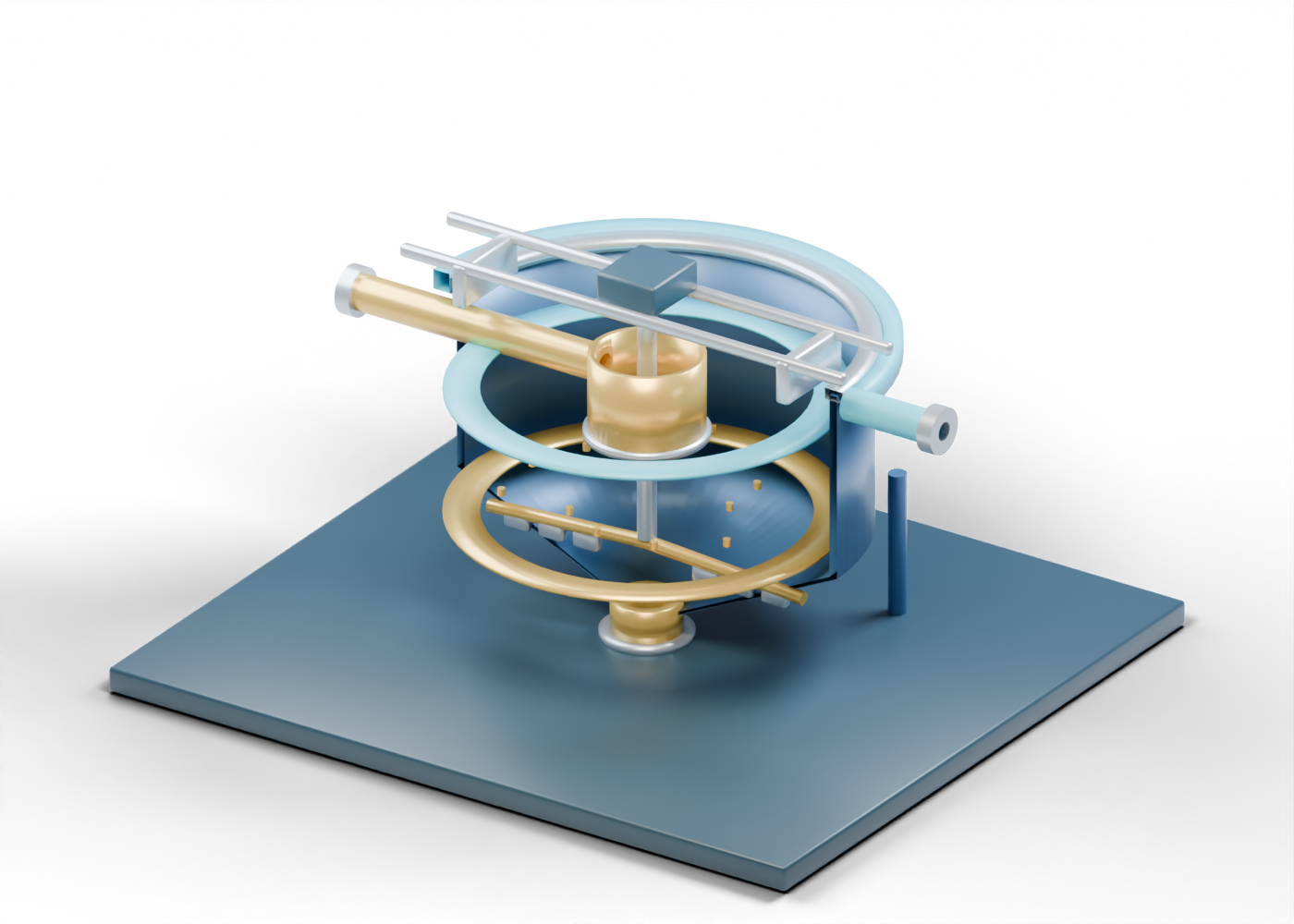
Begin where streams get different names
Find froth, middlings and the lower whole-tailings boundary.
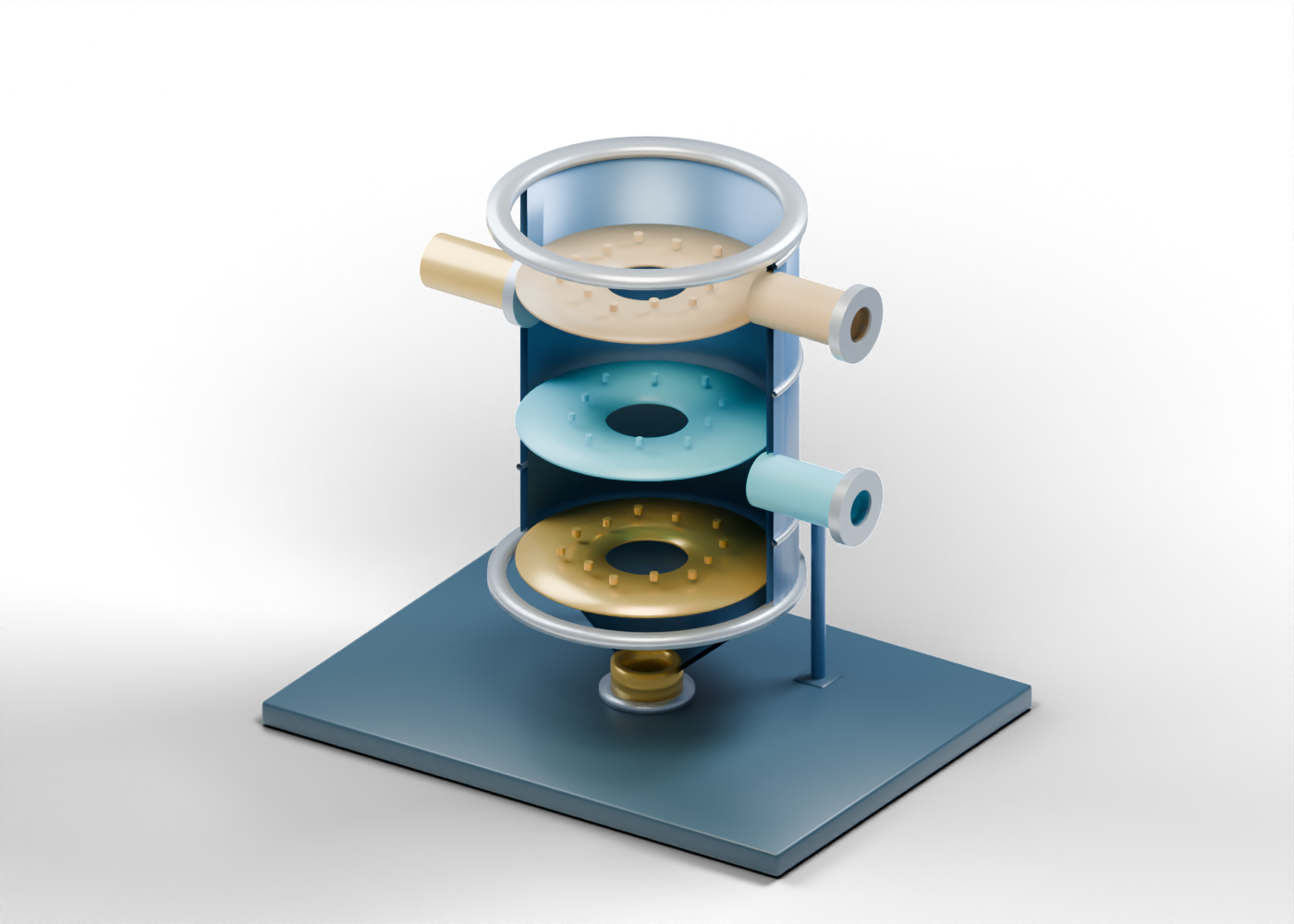
In the primary-vessel illustration, the froth, middlings and lower sand-rich regions are separately selectable. The lower outlet is a useful starting point for the whole-tailings question; the middlings outlet starts a different question.
One AER-filed Horizon plan describes these stream roles for that operation. This original vessel has invented proportions and does not reproduce Horizon equipment, separation performance or a plant layout.
PAUSE AND EXPLAIN
Are middlings and whole tailings the same illustrated stream?
Reveal the explanation
No. The model names separate boundaries. The cited plan describes different roles for them in one operation; the model does not prove a measured split.
STUDY 02 / 06
Inspect the abrasive-slurry wet end
Follow the whole-tailings question into a separate pump concept.
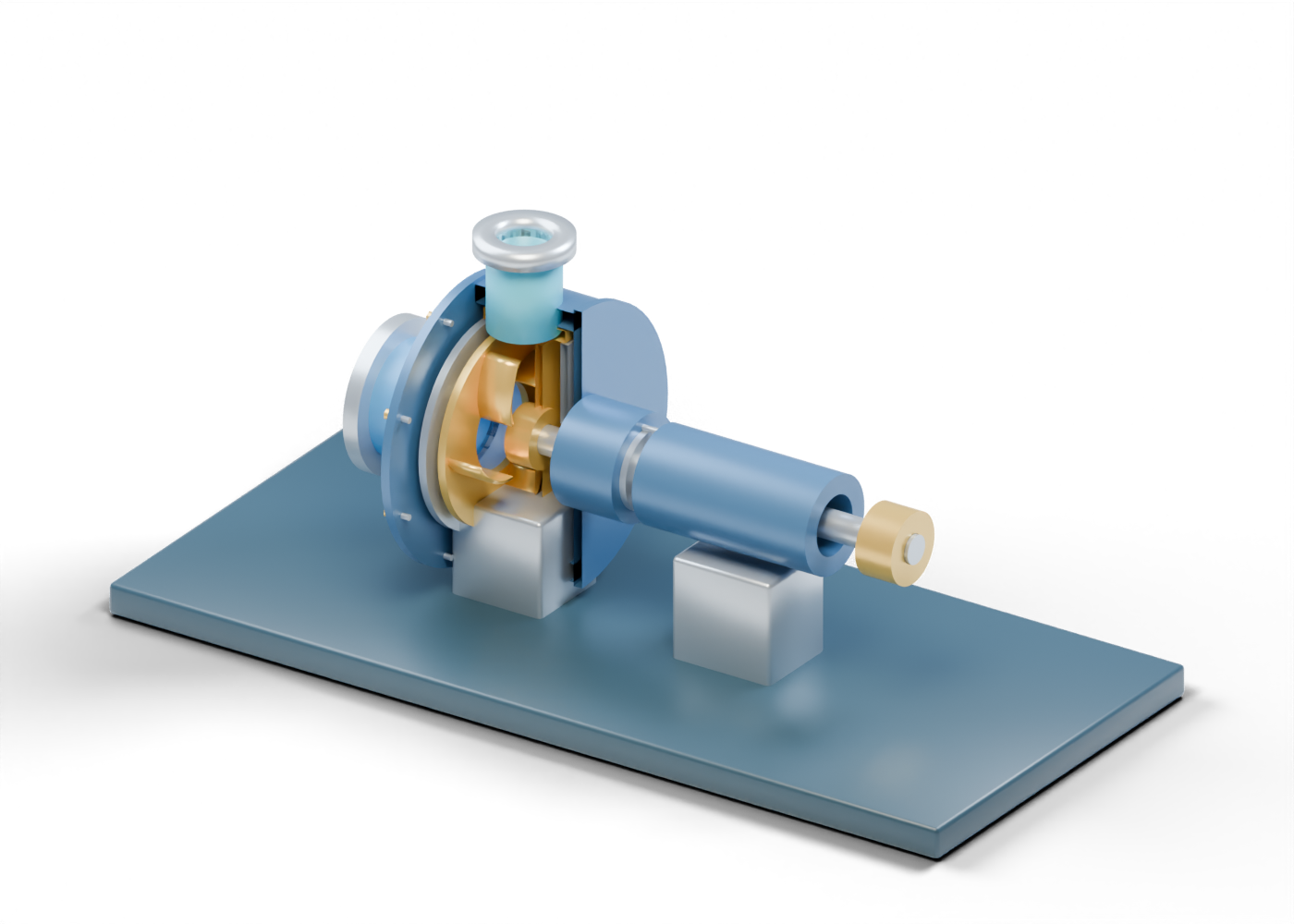
Open the suction neck, a passage vane and upper discharge neck. The throat-bush, liners and casing are individually named so you can compare flow passage with replaceable wear regions.
The AER-filed Horizon account says whole tailings are pumped to classification. This pump is an independent generic illustration. No hydraulic duty, wear life, seal-water arrangement or operator product is specified.
PAUSE AND EXPLAIN
Does this pump render establish that it fits the vessel and cyclone?
Reveal the explanation
No. The examples were proportioned independently. Matching equipment requires actual interface, duty and engineering evidence.
STUDY 03 / 06
Separate the two cyclone outlets
Compare the upper fines-rich and lower coarse-sand boundaries.
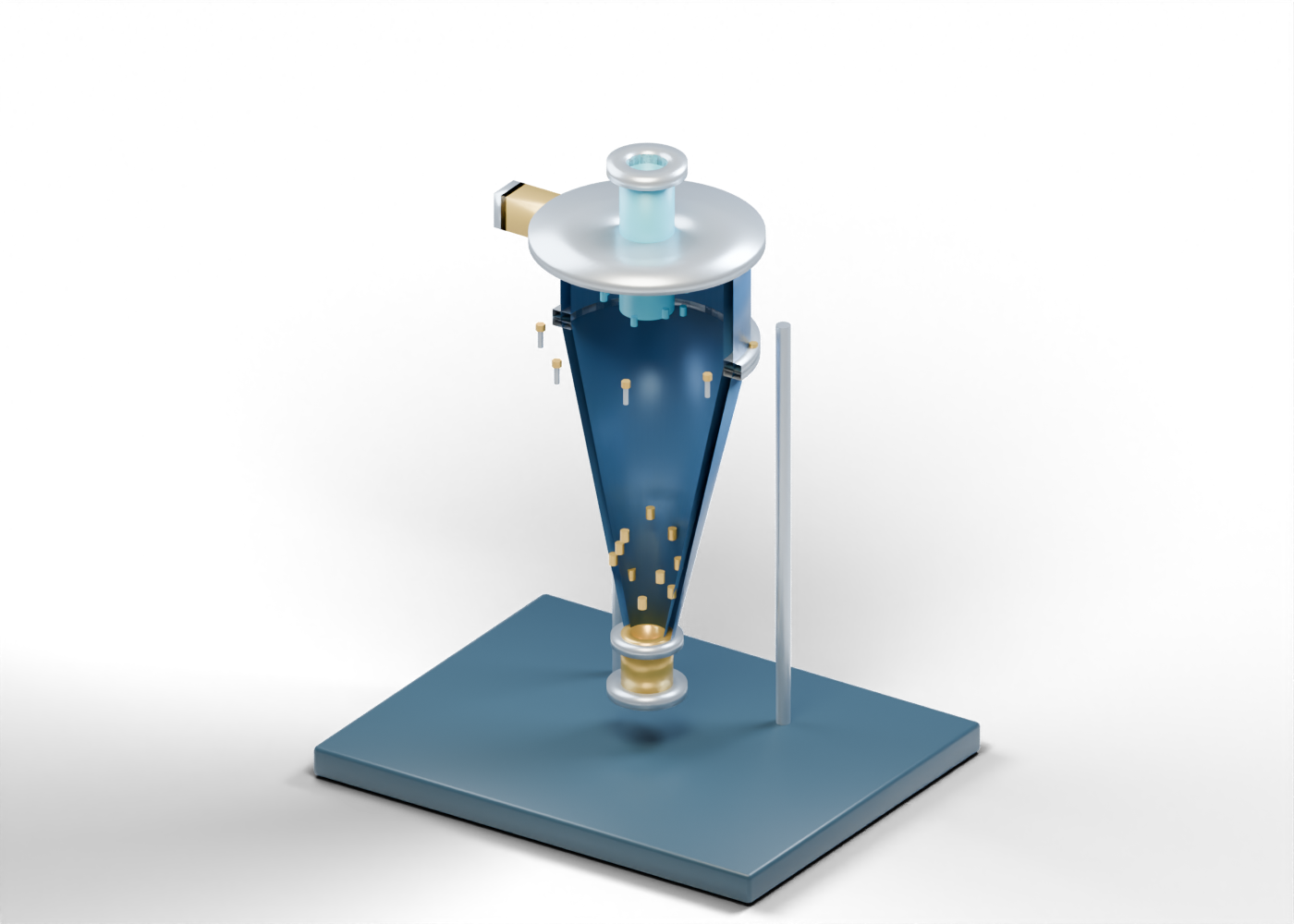
The classification model has an offset feed opening, a central upper overflow finder and a lower apex. Select those parts to distinguish the named boundaries without reading the static coloured cues as measured trajectories.
The Horizon plan describes an overflow richer in fines and water moving toward thickening and an underflow of coarser sand. That is a description of one operator account, not a size-cut calculation for this generic cyclone.
PAUSE AND EXPLAIN
Can you infer a particle-size cut from the coloured regions?
Reveal the explanation
No. The regions and shapes are teaching cues. There is no simulated flow, sampling or size-distribution evidence.
STUDY 04 / 06
Return to the separate middlings branch
Compare secondary froth with remaining slurry.
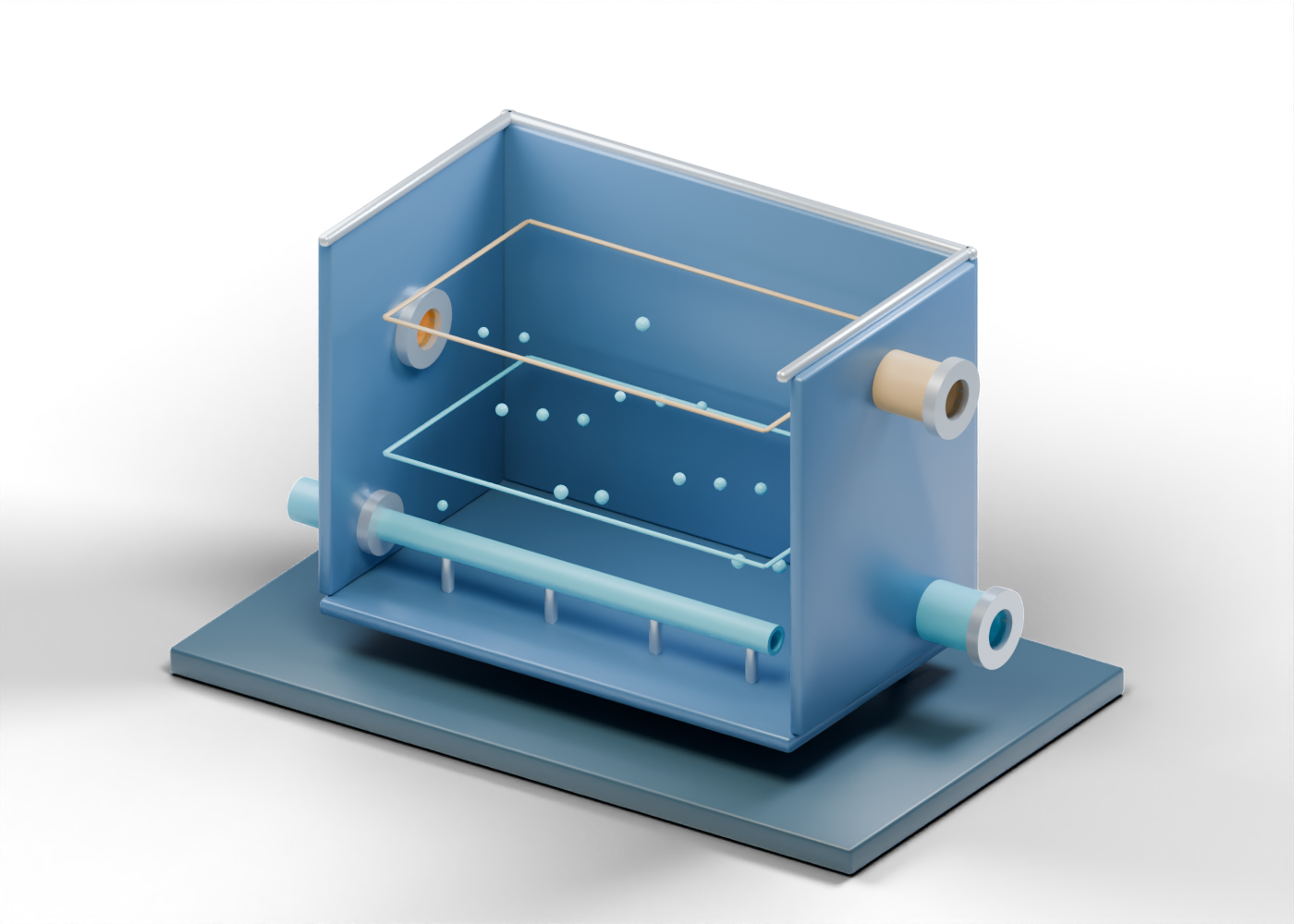
Return mentally to the primary-vessel middlings outlet, then open this independent flotation-cell illustration. The middlings feed, air addition, secondary-froth outlet and remaining-slurry outlet are separate named regions.
This branch must not be mistaken for the cyclone's fines-rich overflow. The two models are not geometrically connected, and no recovery or air-rate result is calculated.
PAUSE AND EXPLAIN
Is flotation residue the same outlet as cyclone overflow?
Reveal the explanation
No. They arise from distinct branch questions in the cited account. Do not merge the independent drawings into an invented pipe route.
STUDY 05 / 06
Ask what thickening would need to show
Locate feedwell, water overflow and solids underflow in a generic vessel.
The thickener model separates its central feedwell, upper overflow collection, stationary rake and lower underflow. These parts help explain the nouns in a tailings story.
The cited Horizon plan describes streams moving toward thickeners, but this illustration does not identify a particular tank, assert that both branches enter the same unit, or specify flocculant, water quality, solids concentration or settling rate.
PAUSE AND EXPLAIN
Does a visible overflow band demonstrate clarified-water quality?
Reveal the explanation
No. It identifies a vessel region. Water quality requires samples and site-specific measurements.
STUDY 06 / 06
Read a real project claim with the model in view
Separate equipment vocabulary from site evidence.
For any project headline, identify the operator, dated filing, facility and actual stream first. Then look for a stated measurement basis and whether the source reports a proposal, installed asset or observed outcome.
These five independently authored illustrations teach component names and questions to ask. They contain no verified process-flow diagram, connected piping, capacity, water balance, recovery, approvals or operating instructions.
PAUSE AND EXPLAIN
What is still missing before a site-specific performance claim?
Reveal the explanation
An attributable record for the actual facility, equipment, stream, time period and measured result. The original models alone supply none of those.
Keep the source beside the illustration.
Primary references checked September 28, 2026. The AER-hosted filing is one operator's account. The manufacturer pages support limited component vocabulary. None validates our invented dimensions or a site-specific result.
- AER-filed CNRL Horizon Tailings Measurement System Plan (2024) ↗
One operator's account of separation and tailings stream roles; no operator geometry adopted.
- KSB pump lexicon — slurry pump ↗
General abrasive-slurry pump vocabulary only; no product or duty adopted.
- Metso — MHC hydrocyclones ↗
General classification and outlet vocabulary only; no product geometry or performance adopted.